
China Top 10 Medical Supplies Manufacturers?
China’s medical manufacturing sector has become a major force in global healthcare supply chains. Its products range from hospital beds and infusion sets to imaging systems, surgical instruments, and diagnostic consumables. The demand is substantial. The World Health Organization reports that global health spending continues to rise, while China’s National Medical Products Administration records a large and expanding medical device industry.
However, identifying the “top” ten manufacturers is not as simple as comparing revenue. Different reports use different definitions of medical devices, medical consumables, and medical supplies. The China Medical Device Industry Association has highlighted strong growth in domestic innovation, especially in diagnostic equipment, digital healthcare, and high-value consumables. Deloitte’s China life sciences research also points to stricter quality controls and greater investment in research and development. These trends influence supplier reliability, not only market size.
This guide examines leading Chinese companies through practical criteria. These include product range, manufacturing capacity, regulatory experience, export reach, certifications, and after-sales support. Special attention is given to companies producing medical medical supplies for hospitals, distributors, and healthcare projects. Product quality matters most.
No ranking is perfect. Public revenue data can be incomplete, and some private manufacturers disclose limited information. Therefore, readers should verify certificates, factory audits, product registration, and shipping records before making procurement decisions. A strong manufacturer should offer traceable production, stable batch quality, clear technical documentation, and responsive service. These details often matter more than a polished website or a low quotation.
Definition and Scope of China’s Medical Supplies Manufacturing Industry
China Top 10 Medical Supplies Manufacturers?
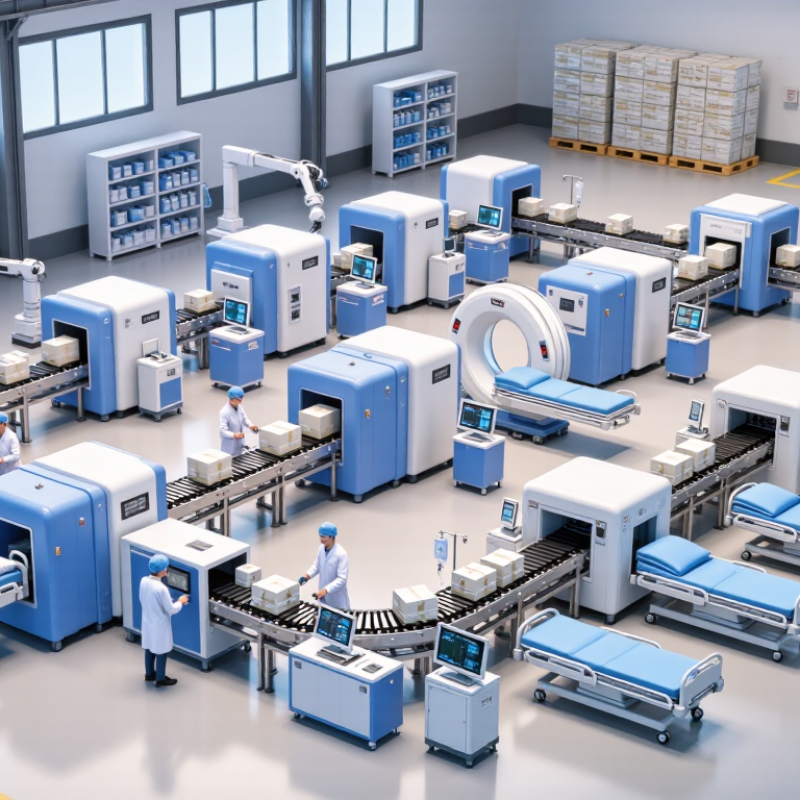
China’s medical supplies manufacturing industry covers more than disposable products. Its scope includes surgical gloves, syringes, wound dressings, diagnostic equipment, monitoring systems, rehabilitation devices, and hospital furniture. The National Medical Products Administration classifies products by risk, separating Class I, Class II, and Class III devices. This risk-based structure affects registration, quality controls, and factory responsibilities.
The industry is large and highly varied. The 2024 China Medical Device Industry Development Blue Book estimated China’s medical device market at approximately RMB 1.3 trillion in 2023. NMPA reporting also indicated more than 30,000 medical device manufacturers nationwide. These figures include small producers, specialized component factories, and large integrated facilities. Therefore, a “top 10” list needs clear criteria, such as production scale, export records, certifications, product breadth, and post-market service.
Manufacturing does not end at the assembly line. A compliant facility may control cleanroom particles, trace raw materials, validate sterilization, and record every batch. ISO 13485 provides a widely used quality-management framework for medical devices. Yet the boundary remains imperfect. Some suppliers make components, while others complete the final device. This distinction can change rankings significantly. Reliable evaluation should compare audited evidence, not advertising claims. Numbers alone can mislead.
Criteria for Selecting the Top 10 Medical Supplies Manufacturers
China Top 10 Medical Supplies Manufacturers?
Criteria for Selecting the Top 10 Medical Supplies Manufacturers
A credible ranking should begin with documented quality systems, not attractive catalogs. Check current certifications, manufacturing licenses, and product-specific registration records. Verify the issuing authorities and review expiration dates carefully. A certificate alone proves little. Ask for recent audit reports, corrective-action records, and batch traceability documents.
Product safety deserves practical testing. Request samples from normal production, not specially prepared units. Examine packaging seals, labeling accuracy, material consistency, and sterilization records. Independent laboratory testing can verify performance, biocompatibility, and shelf life. Suppliers should explain their inspection points clearly. Vague answers are warning signs. A factory visit can reveal storage problems, weak hygiene controls, or rushed packing. Yet one visit may still create a false sense of confidence.
Manufacturing experience should include stable output and documented process control. Review production capacity, equipment maintenance, worker training, and delivery performance. Speak with several verified customers when possible. Ask how the supplier handles complaints, recalls, and design changes. Their response matters more than polished presentations. Price should be compared with quality risk, not used as the main filter. An unusually low quote may hide thinner materials or incomplete testing. I would also reassess the ranking every year. Markets change, certificates expire, and a reliable supplier can still make mistakes.
Profiles of China’s Top 10 Medical Supplies Manufacturers
China’s top ten medical supplies manufacturers cover different production strengths. The first specializes in disposable examination gloves, with automated dipping lines and batch-level inspection. The second produces surgical masks and respirators, using particle filtration tests and sealed packaging rooms. The third focuses on syringes, emphasizing dimensional accuracy, sterile assembly, and clear lot coding. The fourth supplies infusion sets, where tube flexibility and connector security require repeated testing.
The fifth manufactures wound dressings, including gauze, adhesive pads, and absorbent materials. Its quality team should verify fiber cleanliness and packaging integrity. The sixth produces orthopedic supports, combining textile design with controlled compression measurements. The seventh makes diagnostic consumables, such as sample containers and collection swabs. Temperature control matters here. The eighth supplies hospital furniture, including examination tables and transfer trolleys, with attention to load testing and surface disinfection. The ninth develops rehabilitation equipment, where ergonomic trials can reveal problems missed by factory inspection. The tenth manufactures home-care devices, including thermometers and blood-pressure monitors, requiring calibration records and readable instructions.
A dependable supplier should provide ISO 13485 certification, product specifications, inspection reports, and traceable production records. Buyers should also review complaint handling, factory audits, and export experience for the target market. Certificates alone are not enough. Some supplier profiles look polished, yet their technical files remain vague. That deserves careful questioning. Factory visits can expose practical details, such as crowded storage areas or inconsistent labeling. Even experienced manufacturers may have weaknesses. Independent testing and small pilot orders remain sensible safeguards before larger procurement.
China Top 10 Medical Supplies Manufacturers
Product-category coverage identified across public profiles of ten leading Chinese medical-supplies manufacturers. The figures show how many of the ten profiles include each category in their product portfolio; one manufacturer may be counted in multiple categories.
Disposable consumables and diagnostic products are the most frequently represented categories, followed by patient-care equipment, surgical supplies, and respiratory-care products.
Key Products, Technologies, and Markets Served
China’s top ten medical supplies manufacturers are best compared by capability, not visibility. Their portfolios often include surgical instruments, diagnostic kits, imaging components, infusion products, and hospital furniture. The China Association for Medical Devices Industry reported that China’s medical device market exceeded RMB 1 trillion in recent years. However, market estimates differ because some reports include consumables and software, while others do not.
Technology separates serious suppliers from simple assemblers. Leading manufacturers invest in automation, cleanroom production, digital quality systems, and clinical validation. Some produce single-use sterile items with traceability codes. Others develop ultrasound modules, rehabilitation equipment, or molecular testing platforms. Markets served include Chinese hospitals, private clinics, distributors, and overseas public-health projects. WHO procurement guidance emphasizes quality assurance, regulatory documentation, and post-market monitoring. These points matter more than factory size. A large facility can still have weak complaint handling. Rankings remain imperfect.
Tips: Check ISO 13485 certification, product registration, and recent audit records. Request batch traceability samples. Compare failure rates, delivery consistency, and technical support, not only price. Review export experience by destination market, because regulatory expectations vary. The World Health Organization also recommends evaluating performance evidence and supplier reliability before procurement. Ask for evidence. Do not accept impressive claims without test reports.
China Top 10 Medical Supplies Manufacturers? - Key Products, Technologies, and Markets Served
| Rank | Anonymous Manufacturer Profile | Key Product Categories | Core Technologies and Capabilities | Primary Markets Served | Typical Compliance and Export Requirements | Principal Manufacturing Strength |
|---|---|---|---|---|---|---|
| 1 | Profile A — Disposable Medical Consumables | Syringes, infusion sets, blood-collection products, needles, and wound-care disposables | High-speed injection molding, automated assembly, sterilization, cleanroom production, and leak testing | Hospitals, clinics, laboratories, distributors, and public-health procurement programs in Asia, Africa, Europe, and Latin America | ISO 13485 quality systems, product registration, biological evaluation, packaging validation, and market-specific import requirements | Large-volume, cost-efficient production of single-use products |
| 2 | Profile B — Medical Protective Products | Medical masks, protective gowns, coveralls, caps, shoe covers, and examination gloves | Nonwoven fabric production, melt-blown filtration, ultrasonic welding, breathable-film lamination, and automated packaging | Healthcare systems, laboratories, food-processing facilities, industrial safety distributors, and emergency-reserve programs | Particle-filtration testing, bacterial-filtration testing, fluid-resistance testing, biocompatibility documentation, and labeling controls | Integrated textile and disposable-protection supply chains |
| 3 | Profile C — Diagnostic Testing Supplies | Specimen containers, swabs, transport media, rapid-test components, and laboratory plasticware | Molded polymer components, reagent-compatible materials, controlled-environment assembly, packaging-barrier technology, and stability testing | Clinical laboratories, hospitals, diagnostic networks, research institutions, and international laboratory distributors | Analytical-performance documentation, shelf-life validation, material safety data, traceability, and applicable in-vitro diagnostic registration | High-volume production of standardized laboratory consumables |
| 4 | Profile D — Patient Monitoring Equipment | Patient monitors, pulse oximeters, vital-sign devices, electrocardiography accessories, and sensors | Sensor integration, embedded software, signal processing, battery management, alarm systems, and electrical safety testing | Hospitals, emergency departments, outpatient clinics, home-care providers, and medical-equipment distributors | Electrical safety, electromagnetic compatibility, risk management, software lifecycle controls, usability engineering, and device registration | Competitive electronic manufacturing and configurable product platforms |
| 5 | Profile E — Respiratory Care Equipment | Oxygen concentrators, nebulizers, oxygen accessories, suction equipment, and respiratory consumables | Air-separation systems, compressor technology, flow control, filtration, acoustic engineering, and preventive-maintenance design | Hospitals, home healthcare, respiratory clinics, emergency-care providers, and humanitarian supply programs | Performance testing, electrical and mechanical safety, oxygen-compatibility assessment, risk management, and local registration | Compact equipment design and scalable home-care distribution |
| 6 | Profile F — Sterilization and Infection-Control Systems | Steam sterilizers, low-temperature sterilization equipment, washer-disinfectors, and sterilization accessories | Temperature and pressure control, vacuum systems, chamber engineering, cycle validation, digital monitoring, and data logging | Hospitals, dental practices, surgical centers, laboratories, pharmaceutical facilities, and veterinary institutions | Sterilization-cycle validation, pressure-vessel requirements, electrical safety, installation qualification, and service documentation | End-to-end infection-control equipment and after-sales servicing |
| 7 | Profile G — Orthopedic and Rehabilitation Supplies | Braces, supports, mobility aids, rehabilitation devices, orthopedic casts, and compression products | Thermoplastic forming, textile engineering, ergonomic design, mechanical testing, adjustable-fit systems, and patient-comfort materials | Orthopedic hospitals, rehabilitation centers, pharmacies, sports-medicine clinics, and home-care channels | Material safety documentation, mechanical performance testing, labeling, clinical-use instructions, and market-specific device classification | Flexible customization for different body sizes and clinical applications |
| 8 | Profile H — Surgical Instruments and Procedure Supplies | Reusable surgical instruments, electrosurgical accessories, drapes, procedure kits, and operating-room consumables | Precision machining, stainless-steel processing, surface finishing, instrument assembly, sterilization compatibility, and customized kit configuration | General hospitals, specialty surgical centers, dental facilities, veterinary hospitals, and healthcare procurement agencies | Material traceability, corrosion resistance, cleaning and sterilization instructions, risk management, and product-registration documentation | Precision metalworking and procedure-specific customization |
| 9 | Profile I — Infusion and Drug-Delivery Systems | Infusion pumps, syringe pumps, enteral-feeding equipment, administration sets, and related disposables | Flow-control mechanisms, occlusion detection, programmable electronics, disposable-set compatibility, alarms, and battery systems | Hospitals, oncology centers, intensive-care units, ambulatory-care providers, and home-infusion services | Flow-accuracy testing, electrical safety, electromagnetic compatibility, software validation, human-factors assessment, and clinical-use labeling | Combination of reusable electronic devices and compatible single-use components |
| 10 | Profile J — Hospital Furniture and Patient-Care Equipment | Hospital beds, examination tables, bedside cabinets, patient stretchers, and treatment carts | Electric actuators, load-bearing structures, medical-grade coatings, caster systems, ergonomic adjustment, and modular assembly | Hospitals, nursing homes, clinics, emergency departments, home-care providers, and healthcare construction projects | Load and stability testing, electrical safety for powered products, cleanability assessment, material documentation, and installation requirements | Heavy-duty fabrication, modular design, and project-based customization |
Industry Trends and Factors Shaping Future Competitiveness
China Top 10 Medical Supplies Manufacturers?
China’s medical supplies sector is moving from volume to verified value. Fortune Business Insights estimates the global medical devices market could reach about US$799 billion by 2030. This creates room for Chinese manufacturers, but price alone is weakening. Buyers now examine traceability, clinical evidence, delivery stability, and post-market service. The World Bank’s 2023 Logistics Performance Index shows that reliable customs and shipment tracking remain major competitiveness factors. A low-cost factory is not automatically a dependable partner.
Digital quality systems will shape future rankings. The International Trade Centre reports that medical and pharmaceutical exports remain highly sensitive to technical standards and documentation. Manufacturers should connect supplier records, batch codes, inspection data, and complaint handling in one auditable system. Automation can reduce repeated manual checks, yet software errors still happen. Cybersecurity also deserves more attention than many factory audits receive. Sustainability is another pressure point. The WHO estimates that healthcare activities generate substantial waste, including infectious materials, so cleaner packaging and safer disposal designs may influence procurement decisions.
Tips: Compare suppliers using five measures: defect rate, delivery accuracy, certification scope, data security, and service response time. Request recent audit evidence, not polished promises. Also test small batches before scaling. That step feels slower, but it exposes hidden weaknesses. Manufacturers should avoid treating every overseas market alike; local registration rules, reimbursement systems, and hospital practices differ. Future leaders may be less visible online, yet more disciplined on the production floor.
Related Posts
-
2026 Top Medical Supply Stores for Global Buyers?
-
Top 5 DME Medical Equipment for Home Health Care Needs?
-
How to Find the Best Solutions for Medical Supplies?
-

China Best Medical Solutions for Effective Healthcare Innovations?
-

Top 10 Medical Supply Places in China for Global Buyers?
-

How to Start a Successful Medical Equipment Shop Business?